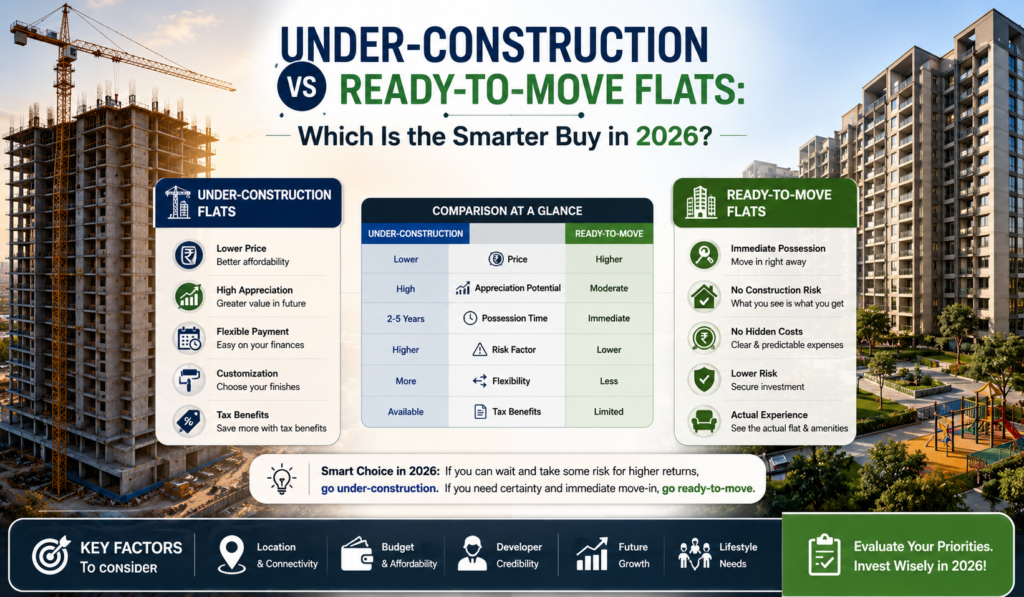
The under construction vs ready to move flat debate is the first big decision most buyers face, and in 2026 it comes down to more than just price. Under-construction homes can cost less and offer flexible payment, while ready-to-move flats remove waiting and uncertainty. This guide weighs the real pros and cons — price, GST, tax benefits and risk — so you can decide which is the smarter buy for you.
The core difference
An under-construction property is one you book before it is finished, paying in stages as the building comes up. A ready-to-move (RTM) property has received its completion/occupancy certificate and can be occupied immediately after registration. That single difference — possession now versus possession later — drives every other trade-off below.
Price and payment: where under-construction wins
Under-construction flats are usually priced lower than comparable ready units in the same project or micro-market, because the developer is raising capital and you are taking on some risk and waiting time. You also benefit from construction-linked payment plans, where you pay in instalments tied to building milestones rather than the full amount upfront — easier on cash flow, especially alongside a home loan. If prices in the area are rising, early buyers can also see paper appreciation by possession.
Ready-to-move homes command a premium for certainty, but you pay the full consideration at once and start EMIs immediately without a construction wait. Use a home loan EMI calculator to compare how each payment structure fits your monthly budget.
GST: a real cost difference
This is where many buyers miss a genuine saving. GST applies to under-construction homes but not to ready-to-move properties that have already received their completion certificate.
| Property type | GST |
|---|---|
| Under-construction (non-affordable) | 5% (no input tax credit) |
| Under-construction (affordable housing) | 1% (no input tax credit) |
| Ready-to-move (with completion certificate) | Nil |
On a large purchase, that 5% can offset much of the discount an under-construction unit offers. Read our detailed guide to GST on residential property to see how it applies to your case, and confirm the current rate before you calculate.
Tax benefits on under-construction property
Home-loan tax benefits differ meaningfully by stage. Once you take possession and the property is complete, you can claim deductions on home-loan interest (Section 24b) and principal (Section 80C) as usual. For an under-construction home there is a specific rule for the interest you pay before completion:
- Interest paid during the construction period is called pre-construction interest.
- You cannot claim it while the property is being built.
- After you take possession, you can claim that accumulated pre-construction interest in five equal annual instalments, starting from the year of completion, subject to the overall interest deduction cap.
With a ready-to-move home you begin claiming interest and principal deductions from the year of purchase, with no waiting or deferral. Tax rules change, so confirm the current limits with a tax adviser or the Income Tax portal.
Risk, RERA and what you actually receive
The biggest downside of under-construction is delivery risk — delays, specification changes, or in rare cases a stalled project. RERA has reduced this by mandating registration, escrow of buyer funds and defined timelines, but you should still verify the project’s RERA registration, the developer’s track record and the promised specifications before booking.
Ready-to-move removes most of this uncertainty: you see the actual flat, the finishes, natural light and the neighbourhood before you pay, and there is no possession risk. Just confirm the completion/occupancy certificate is in hand and check the RERA carpet area matches what you are being sold — the usable carpet area can differ from the marketed super built-up figure.
Under construction vs ready to move: side-by-side
| Factor | Under-construction | Ready-to-move |
|---|---|---|
| Price | Usually lower | Premium for certainty |
| Payment | Staged, milestone-linked | Full amount upfront |
| GST | 5% (1% affordable) | Nil |
| Possession | After construction | Immediate |
| Risk | Delay/delivery risk | Minimal |
| What you see | Plans, sample flat | Actual finished home |
| Rent while waiting | You keep paying rent | Move in and stop rent |
So which should you buy in 2026?
Choose under-construction if you want a lower entry price and flexible payments, you are buying from a credible RERA-registered developer, and you can wait for possession while managing your current rent or EMI. Choose ready-to-move if you need to occupy soon, want to avoid GST and delivery risk, and value seeing the exact home before you pay. Whichever you pick, confirm the paperwork — including the possession certificate for a ready unit — and factor registration charges into your budget. You can compare live inventory of both types by browsing the full list of available projects.
Frequently Asked Questions
Is it better to buy a ready-to-move or an under-construction flat?
Do I pay GST on a ready-to-move flat?
What tax benefits apply to an under-construction property?
How risky is buying an under-construction home?
Which is cheaper overall?
This article is for general information only; GST rates, tax rules and project details change, so verify current figures on the relevant official government portals and with a tax adviser before acting. Godrej Realty Homes is a property listings portal.